
Tidy Puzzle: Perfect Satisfy
FALCON GAMEPuzzle
3.7371.00 Reviews
- Version
- 1.5.3
- Installs
- 5.00M
- Age Rating
- Everyone
Screenshots







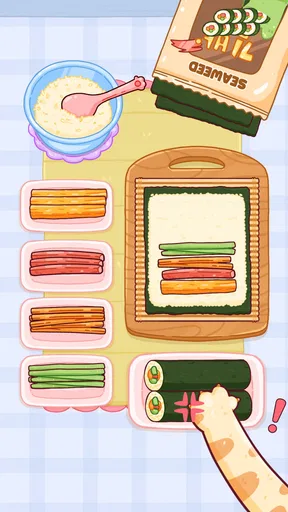
Our Review of Tidy Puzzle: Perfect Satisfy
 Analysis by Appyee
I usually know within a few minutes whether a puzzle game deserves a place on my phone. Tidy Puzzle: Perfect Satisfy makes a good first impression because it aims for a very specific kind of pleasure: taking a messy visual arrangement and turning it into something orderly. That simple promise gives each interaction an immediate purpose, which is exactly what I want when I have only a short break.
Developed by FALCON GAME, this free puzzle title sits in the relaxing, ASMR-leaning corner of mobile gaming. I would not describe it as a demanding brainteaser first. Its appeal comes from the small feeling of completion after each tidy action, with the puzzle structure providing just enough thought to keep the process from becoming a completely passive tap-through experience.
Why the first few minutes work so well
The strongest part of the game is its instant readability. I do not need a long explanation before understanding the basic idea: look at the arrangement, identify what seems out of place, and work toward a cleaner result. That matters on a phone, where a game has to earn attention quickly rather than asking me to study a complicated interface.
The visual goal also makes the game approachable for people who are not normally puzzle fans. Traditional match games often depend on planning combinations, while word puzzles ask for vocabulary and logic games may require sustained concentration. Here, the satisfaction is more physical and visual. I am responding to order, spacing, placement, and the sense that a cluttered scene is gradually becoming complete.
That makes it particularly suitable for a quiet moment after work, during a commute, or while waiting for an appointment. I can open it without preparing myself for a long challenge. The game’s content rating is Everyone, and its gentle presentation makes that broad audience feel appropriate. Younger players can understand the basic objective, while adults may enjoy it as a low-pressure way to reset their attention.
The opening experience is not completely free from the usual mobile-game limitations. A relaxing puzzle can lose some of its calm if the pacing around a level feels too eager or if the player is pushed toward spending. I paid attention to that because the game includes optional in-app purchases ranging from $1.99 to $39.99 per item. The free entry point is useful, but anyone who dislikes purchase prompts should approach it with the same caution they would bring to other free-to-play games.
A puzzle built around visible progress
What I like is that progress is easy to read without needing a score sheet. In many puzzle games, success is expressed through points, streaks, or a timer. In this one, the result is more direct: the scene looks better when I have solved it. That visual feedback gives the game a pleasant cause-and-effect loop, and it helps explain why the experience can feel satisfying even when the underlying task is not especially difficult.
There is also a useful distinction between relaxing and mindless. I still need to inspect the arrangement before acting. Rushing can lead to a misplaced item or an inefficient sequence, while a moment of observation usually makes the next move obvious. My practical tip is to spend the first few seconds looking at the whole scene instead of tapping immediately. That small pause reduces random actions and makes the completion feel earned.
Players who enjoy organizing drawers, arranging objects, cleaning visual spaces, or completing small routines will probably understand the attraction immediately. The game turns that familiar sense of order into a series of compact digital tasks. It is less suitable for someone who wants deep strategy, complex deduction, or a strong competitive system. The pleasure here is in finishing a contained arrangement, not in mastering a large ruleset.
How the session rhythm feels in everyday use
The game works best when I treat it as a collection of short visits rather than a title that demands a long uninterrupted sitting. I can play a little, put the phone down, and return later without feeling that I have abandoned a complicated campaign. That short-session clarity is one of its most practical strengths.
A realistic example is the ten-minute gap before leaving home. I might open the game while waiting for coffee, complete a puzzle, and stop without needing to remember a plot, manage a team, or protect a streak. The same quality helps during a lunch break. If a colleague arrives or a message needs an answer, the game is easy to put aside because the goal of the current activity is self-contained.
That interruption tolerance is more valuable than it sounds. Some puzzle games punish a pause by relying on timed rounds or by making the player remember a complicated board state. Tidy Puzzle: Perfect Satisfy is more comfortable as a background companion to ordinary life. I can give it a few minutes of attention without turning the session into a commitment.
Still, short sessions do not automatically mean unlimited variety. The central action—bringing order to an arrangement—creates a clear rhythm, but it also establishes a boundary around the experience. Once I understand the visual language, I may start solving familiar situations by instinct. The game’s success therefore depends on how effectively its puzzles keep presenting arrangements that feel distinct rather than merely decorated versions of the same task.
What happens when I pause and come back
Returning to the game is straightforward from a mental point of view. I do not have to reconstruct a story or recall a long chain of objectives. That makes it a good choice for people who play in fragments, especially on a phone shared with notifications, calls, and other interruptions.
My advice is to use it as a deliberate reset instead of opening it automatically every time there is a spare second. The visual tidying can be calming, but repeated quick checks can also make the experience blur into routine. I got more from it when I chose a small window to play, focused on the arrangement, and stopped after the satisfaction had peaked.
Another useful habit is to avoid treating every puzzle as a race. The game’s strongest quality is its clean, completed result, so hurried tapping works against the mood. Looking for the relationship between objects before moving anything can make the task feel more like solving and less like guessing. This is especially helpful for players who find the early levels too easy and want to create a little more personal challenge.
For families, the interruption-friendly structure can be convenient. A child can play briefly and hand the device back without leaving a multiplayer match or affecting another player. Adults should still supervise purchases on a device used by children, since the game is free to install but offers paid items. The Everyone rating describes the intended age range, not a guarantee that every household will want unrestricted store access.
Relaxation versus challenge
The “ASMR” side of the experience is best understood as a mood rather than a replacement for a dedicated relaxation app. The game gives me the calming sensation of arranging and completing, but I am still interacting with a puzzle. If I want silence, breathing exercises, or a passive audio experience, a meditation app is a better fit. If I want a gentle activity that occupies my hands and eyes, this game makes more sense.
Compared with a classic match-three game, it is less focused on chain reactions and score optimization. Compared with a hidden-object game, it appears more concerned with restoring order than searching a crowded scene for a list of items. Compared with a traditional logic puzzle, it asks for less abstract reasoning and more visual judgment. Those differences are important: the right alternative depends on whether I want relaxation, competition, discovery, or serious mental difficulty.
I would choose a match game when I want a faster, more energetic loop. I would choose a sudoku-style title when I want concentration that improves through careful deduction. I choose this one when I want a small, visually obvious task with a satisfying endpoint. Its value is not that it replaces every other puzzle genre; it is that it serves a narrower mood well.
Where repetition becomes the main question
The biggest issue for me is replay value. The first rounds benefit from novelty because I am learning how the game presents disorder and completion. After that, the experience needs enough variation in the arrangements and enough freshness in the decisions to keep the tidy-up loop from becoming automatic.
This is where expectations matter. If I want a game I can study for weeks, improve at competitively, or revisit to discover new strategic layers, this is probably not my first recommendation. Its core pleasure is immediate and accessible, not built around a high skill ceiling. That does not make it a bad game; it simply means the replay value is likely to depend more on my current mood than on a long-term mastery goal.
One way I kept it enjoyable was to change how I approached each puzzle. Instead of tapping the first obvious object, I looked for the move that would create the clearest next step. I also tried to appreciate the finished arrangement rather than measuring the session by how many levels I had completed. That mindset suits a game built around satisfaction, and it prevents the experience from turning into a checklist.
There is a trade-off here. The approachable design makes the game easy to recommend to a broad audience, but broad accessibility can reduce the sense of discovery for experienced puzzle players. Someone who normally plays difficult logic challenges may finish the early content without much resistance. For that player, the game is better as a palate cleanser between harder titles than as a primary puzzle hobby.
Practical details before installing
The game is free, runs on Android 8.0 or later, and is currently listed as version 1.5.3. It has passed five million installs, with an average rating of 3.7 from around 8.2 thousand ratings. Those figures suggest a sizeable audience, while the middling average also encourages realistic expectations: this is a pleasant niche experience, not a universally loved puzzle classic.
The developer is FALCON GAME, and the game was released on April 16, 2025. I mention the version because mobile games can change their pacing, presentation, or monetization over time; checking the current build before installing is sensible if a particular feature matters to you. The available purchase range is another reason to review the checkout screen carefully before handing the phone to a child.
Storage and battery behavior are practical concerns with any mobile game, but I would judge this title primarily by how it fits into my routine. Its strongest use case is a short, low-pressure session. If I am looking for a game to play offline for hours, a richer puzzle collection may offer better value. If I want something I can understand immediately and leave without consequences, this format is more convincing.
A further tip is to decide in advance whether you want to spend money at all. Because the game is free to start but includes purchases, I would keep the free experience as the baseline and only consider an item if it solves a specific annoyance for me. That approach avoids allowing the relaxing mood to turn into an impulsive purchase, especially during repetitive sessions when I am simply looking for a little more novelty.
My casual verdict after living with the loop
I recommend Tidy Puzzle: Perfect Satisfy to anyone who enjoys visual order, gentle puzzle solving, and games that respect short gaps in the day. Its immediate hook is clear, its sessions are easy to interrupt, and its completed scenes provide a small but genuine feeling of reward. I can imagine keeping it available for waiting rooms, quiet evenings, or those moments when I want to do something without committing to a full gaming session.
I would not recommend it as the main choice for players who need deep strategy, competitive pressure, or constant mechanical surprises. The same simplicity that makes it welcoming can make it feel repetitive once the organizing pattern becomes familiar. Players who are sensitive to free-to-play purchase prompts should also approach it carefully and use the device’s purchase controls where appropriate.
My final judgment is favorable but specific: this is a short-session satisfaction game, not a long-term puzzle challenge. It succeeds when I want a clear visual problem, a calm pace, and an ending I can see immediately. It is less convincing when I expect every return visit to feel substantially different.
For me, that is enough to make it worth trying. The free entry point lowers the risk, the Everyone rating keeps the concept broadly accessible, and the compact design fits real interruptions better than many more demanding alternatives. I would install it for moments when tidying a small digital mess sounds more appealing than chasing a high score—and I would keep another puzzle game nearby for the days when I want something harder.
Verdict
Strengths of Tidy Puzzle: Perfect Satisfy
- Simple drag-and-drop controls are easy to learn.
- Short levels make it suitable for quick play sessions.
- Satisfying visual organization creates a calming experience.
- Works well for players who prefer non-competitive puzzles.
- Gradual challenges help maintain a relaxed difficulty curve.
Limitations of Tidy Puzzle: Perfect Satisfy
- Gameplay may feel repetitive after extended sessions.
- Some puzzles can be solved mainly through trial and error.
- Ads may interrupt the flow between levels.
- Limited variety can reduce long-term replay value.
- Progression may feel slow for experienced puzzle players.
Other Releases by FALCON GAME
View All
Jelly Master: Mukbang ASMR
Simulation4.1

AI Photo Enhancer: Remove Item
Photography4.4
Similar Picks in This Category
View All
Block Blast!
HungryStudio4.8

Braindom: Brain Games Test
Lahana Game Studio4.6

AMAZE!
CrazyLabs LTD4.6

Sudoku - Classic Sudoku Puzzle
Oakever Games4.7

Art Puzzle - Puzzle Games
Easybrain4.8

Amaze GO!
Oakever Games4.9
Frequently Asked Questions
What is Tidy Puzzle: Perfect Satisfy?
Tidy Puzzle: Perfect Satisfy is a relaxing organization and sorting game built around completing small, satisfying tasks. Instead of fast action or complicated rules, you arrange objects, clean spaces, match items, and solve visual puzzles in the correct order. Each level is designed to feel rewarding, making the game suitable for short breaks as well as longer casual play sessions.
How do you play Tidy Puzzle: Perfect Satisfy?
Gameplay is based on observing the scene and interacting with objects using simple taps, swipes, or drag-and-drop movements. You may need to place items in their proper locations, organize clutter, complete cleaning activities, or solve a visual arrangement challenge. The instructions are generally easy to understand, although some levels require careful attention to details and object positions.
Is Tidy Puzzle: Perfect Satisfy suitable for children?
The game is generally accessible to children because it uses simple controls, colorful visuals, and straightforward puzzle objectives. However, parents should still review the app’s age rating, advertising settings, and any in-app purchase options before allowing younger children to play. Some puzzles may also require patience and visual reasoning rather than purely random tapping.
Can Tidy Puzzle: Perfect Satisfy be played offline?
Many of the game’s basic puzzle activities may work without a constant internet connection, which makes it convenient for travel or situations with limited access to Wi-Fi or mobile data. Nevertheless, an internet connection may be required for advertisements, reward systems, updates, or certain online features. Availability can vary by version and device, so testing offline after installation is recommended.
Does Tidy Puzzle: Perfect Satisfy contain ads or in-app purchases?
As with many free-to-download casual puzzle games, Tidy Puzzle: Perfect Satisfy may include advertisements and optional in-app purchases. Ads can potentially appear between levels or when claiming extra rewards, while purchases may offer bonuses or remove advertising, depending on the version. Check the store listing and the payment settings on your device before downloading or making any purchase.
Play our best games!


